 by Don Lindsey
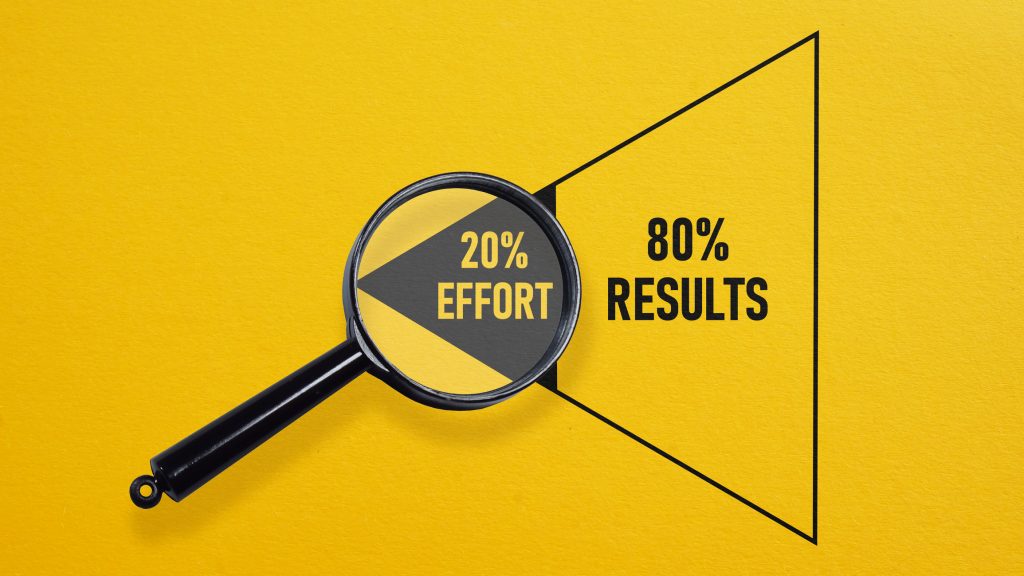
The Pareto Analysis suggests that in many situations, a small percentage of causes (usually 20%) drive a large percentage of results (usually 80%).
Often called the 80/20 rule, the Pareto Analysis isn’t about exact percentages. Sometimes it’s 70/30, sometimes 90/10. The point is that most headaches stem from a small number of issues.
I’ve come to rely on Pareto Analysis as a practical decision-making tool over the years. It consistently helps focus my attention, resources, and efforts where they generate the greatest improvement.
Here are ten reasons why it works so well for manufacturers.
 Pareto Analysis identifies where to focus your energy. It helps to prioritize the small number of causes responsible for most of the operational pain, so you don’t waste time spreading your efforts across many issues. For example, a handful of defect types account for most scrap costs, or a few suppliers account for most late deliveries.
 It improves resource allocation. It helps you direct labor, capital, engineering effort, and inventory investment toward the areas that produce the highest return. For example, it helps focus preventive maintenance on the limited number of machines that account for most downtime.
 It enhances inventory management. In systems like QAD, Pareto Analysis guides ABC classification, cycle counting, and stocking decisions. Usually, a small handful of “A” items make up most of your inventory value, while a long list of “C” items has far less impact.
 It supports continuous improvement. Pareto Analysis is commonly used in Lean Manufacturing, Six Sigma, and root cause analysis to help teams focus on the issues that have the greatest impact rather than getting lost in less important details.
 It keeps things simple. When you pinpoint which products, customers, or processes really drive your business, it becomes much easier to streamline operations. In many cases, a small share of products delivers most of the revenue, while lower-volume items tend to create the most complexity.
 It improves customer and supplier relationships. Pareto Analysis highlights high-value customers, high-risk suppliers, and recurring service issues. This enables more focused relationships with customers and suppliers.
 It helps quality control. Pareto Analysis can help quality control teams identify the most common defect types or failures, so they can act faster to achieve measurable improvements.
 It helps forecast financial impact. Financial exposure is often concentrated in a small number of products or customers. Pareto Analysis helps identify where margins, costs, or risks are most significant, supporting better strategic planning.
 It helps you make decisions faster. You can quickly see what needs attention first, rather than treating every issue equally. That means quicker, clearer responses and more effective action.
 It enables data-driven auditing and governance. In ERP and manufacturing audits, Pareto Analysis focuses attention on high-value inventory, large variances, and high-risk transactions. This results in more efficient and meaningful audits.
Here’s a simple example of the power of using Pareto Analysis. A company has 1,000 inventory items but discovers that just 150 of them account for 78% of the total value. This knowledge allows them to focus more on those key items—they receive tighter cycle counts, stricter controls, closer forecasting, and more frequent audits. That extra attention helps reduce inventory risk, keep working capital in check, and avoid production hiccups.
Pareto Analysis is really about getting clear on what matters most. It helps you focus your time and effort on where it will make the biggest difference. In manufacturing, that kind of focus isn’t just helpful—it’s critical.
Don Lindsey, CFPIM, CIRM, is a knowledgeable Implementation Project Manager, Trainer, and Business Analyst. He has been an implementation manager on several large, complex ERP projects and has worked with ERP systems since 2007 in Manufacturing, Systems Management, Service & Support, and Finance. Don has a diversified background in various manufacturing industries, from Medical to Electronics to Industrial to Consumer Products. He has spoken for many years at the APICS Conferences, having taught in the APIC Certification program at California State University at Fullerton for over 20 years.